Working with you

Event Director

Rosanna is a powerhouse in managing large-scale events and communication businesses, taking a strategic overview of complex projects for corporate, governmental and charitable organisations. Known for the creativity and flair that she brings to the table, she will get under the skin of your organisation and find the best way to bring your content to life. From setting the strategic direction to handling the complexity and detail of production and delivery, she is skilled at guiding project development at a senior level, liaising with clients and stakeholders, troubleshooting and getting the best out of teams and budgets.


Rosanna offers project direction, creative development and can convene and lead a team for your event.
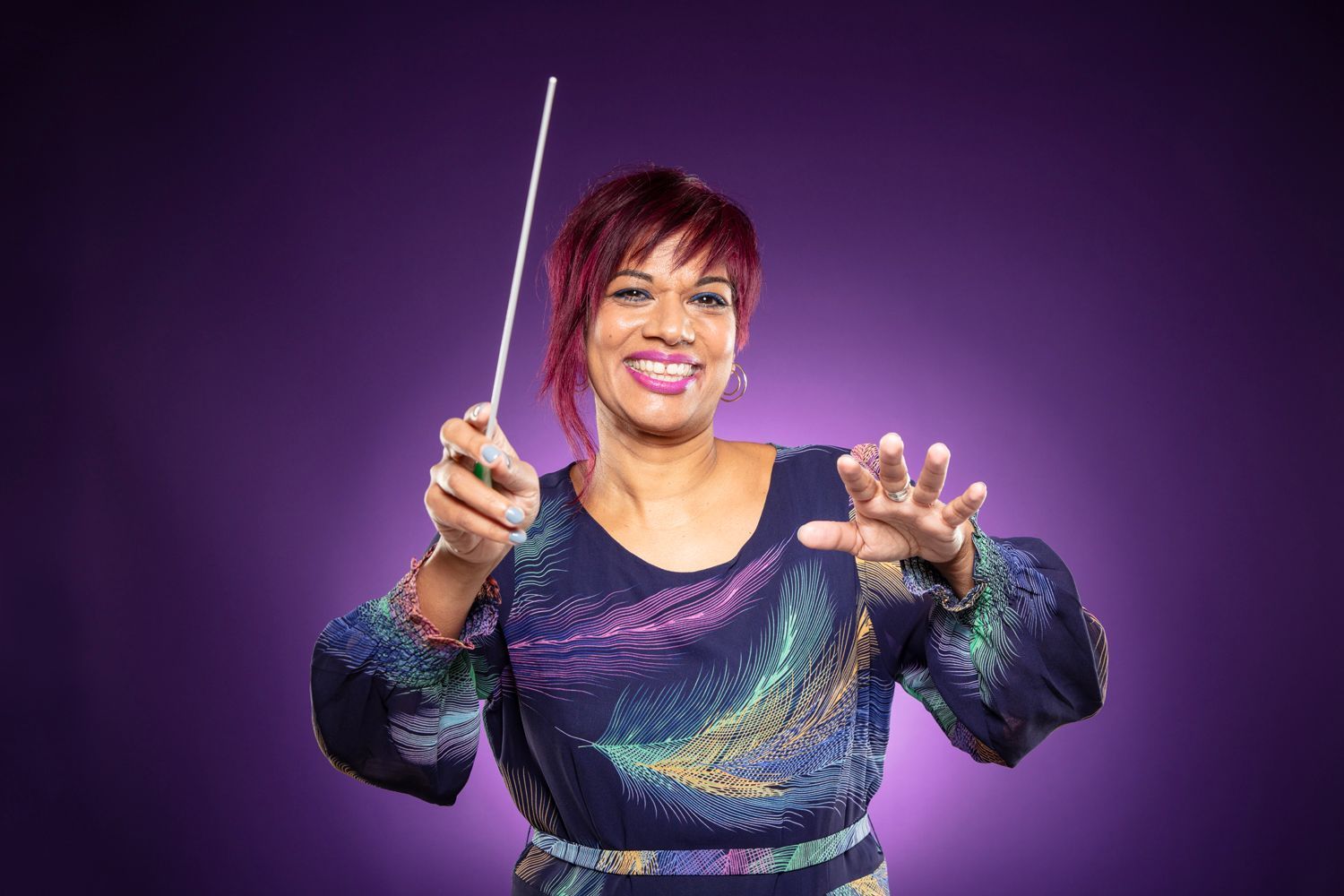

Coach

One-to-one executive coaching

Rosanna works with individuals to raise their self-awareness, gain greater clarity of a situation which in turn opens up choices.


She is passionate about supporting people to find what makes them really come alive and having the awareness and confidence to follow their hearts, in what might sometimes feel like an unconventional path.


Energy is an important part of every session. The energy that she brings to a session, the energy she would like to create within the session and how you both feel after the session.


She likens it to going on an open water swim together…


Imagine swimming side-by-side in the open water. You have a destination in mind. To get there, we immerse ourselves, diving deeper to explore with curiosity whilst the water holds us in a safe positive space. Occasionally we emerge to survey the wider landscape. By getting into flow and rhythm, we’ll have greater self-awareness of the here and now. Sometimes the currents of life may carry us in a different direction, sometimes we navigate deeper waters and it becomes challenging but we’ll swim together, uncovering pathways, continuously moving forward, and we will arrive, feeling energised and with greater clarity.

Group Coaching sessions

A number of workshops are available exploring interpersonal skills with a particular focus on building your influence through emotional intelligence.


Topics covered include self-awareness, resilience, values, stakeholder management and looking at how to communicate effectively in a virtual world.


Sessions can be tailored to your individual requirements.

Business Mentoring

Having held CEO and COO positions, Rosanna offers mentoring to business owners to help them with focus, direction, people development and operational challenges.

Speaker

Rosanna loves to encourage everyone to go on their own journey of self-awareness. She speaks about challenge and change, owning and rewriting your story, building resilience and her own journey from swimming fears to taking part in a Channel relay swim in 2021.


She has spoken at the Women in Banking and Finance Network, 

She is also a keen contributor to podcasts – check out her podcasts here.

Changemakers podcast

CEM podcast with Kirstin Bourne

Writer

Rosanna writes about self-awareness, creativity, emotional intelligence and embracing uncertainty and change in your life

by Rosanna Machado 27 May 2026
Last week a complete stranger stopped me in my local pool and complimented me on my swimming. I can’t tell you how excited I was – it felt like getting a gold star from the teacher, and it made my day. It came in the context of me pushing myself hard to improve my swimming, which can feel very tough at times. Lately I’ve been attending a couple of classes where the speed and pace have increased considerably, and I often find myself trailing at the back of the lane, barely able to keep up. On those days, it’s easy to feel slow, behind, not quite enough. But when I take a step back and consider where I’ve come from, the picture looks very different. I’ve significantly improved; the only reason I’m finding it so hard is that I keep choosing more difficult and challenging classes. I’ve moved the goalposts on myself. My benchmark is no longer where I started, it’s the fastest person in the lane, the toughest set, the next stretch of water. No wonder it feels hard. Sometimes it’s difficult to see what we’ve achieved and who we’ve become because we are constantly on a mission to push ourselves and improve. We quietly raise our own standards again and again and then judge ourselves against those higher and higher expectations. The progress is real, but it gets lost in the noise of the next thing we “should” be doing.  When I think about those challenging classes, the truth is that I am the only one getting worked up about my performance. Everyone else is dealing with their own stuff – their breathing, their technique, their day at work – and I doubt they have time to worry about what I’m doing. The story that “everyone is watching” lives mainly in my head. In reality, most people are too busy staying afloat in their own lane to scrutinise mine. Swimming has taught me that I need balance in my life. I want to be operating at my full wingspan, and that’s why I push myself, but it needs to be on my terms. That means noticing where the energy feels right, where I still find joy, and where there is a sense of fulfilment from what I’m doing. It’s the difference between stretching myself and snapping. When I find the right mix – the tough sessions that expand me and the steady sessions that remind me how far I’ve come – I feel more grounded, more present, more myself. It’s not helpful to compare myself to others and yet, however much I know this, I still fall into that trap. We all do. We scroll, we watch, we glance across at the next lane, and before we realise it we are measuring ourselves against someone else’s goals, timeline or definition of success. We forget that we all have our own journeys and our own paths, with different starting points, constraints and dreams. The person flying past me in the pool might have been swimming for decades; I might have had a terrible night’s sleep. The comparison is never as simple or as fair as it seems. Sometimes I feel the tension between wanting to be part of a community and staying on my own path. I want to belong, to be in the lane with others, and at the same time I want to honour my rhythm, my goals, my way of doing things. I’ve realised that the community I need is the one that supports and cheers me on based on my own goals, not someone else’s. I don’t need to be competitive with others; I just want to keep moving forward on my own path, at my own pace. And half the time that path is still being defined. I’m trying things, changing my mind, veering off course and occasionally deciding that the “wrong” lane was exactly the right experiment after all. The friends who support me when I choose a different path – who stay when I show up slower, more tired, or a bit unsure – are the ones who remind me that I am present and moving forward, even when it might not feel like it. They help me see the progress I can’t yet see in myself. So this is the reminder I’m holding on to: nothing compares to me. Not because I am better or worse than anyone else, but because my life, my experiences and my dreams are uniquely mine. Your lane is yours; mine is mine. The real work is not to be faster than the person next to us, but to keep showing up, to keep learning, and to keep honouring the path that is unfolding under our own feet. And if a stranger happens to stop you one day and notice how far you’ve come, let it in. Let it count. Let it remind you that even when you are busy chasing the next challenge, you are already someone who has travelled a long way – and nothing, and no one, truly compares to that.
by Rosanna Machado 20 April 2026
I used to take it very personally when a friendship fizzled out. I would replay conversations in my head, wondering what I had done wrong and why they didn’t want to hang out with me anymore. As the years have passed, I’ve become more philosophical about it. I’m more in tune with my values, so I immediately notice when something isn’t quite right. As my friendships have got deeper, a superficial friendship stands out and if I’m honest, sometimes I am quietly relieved when it comes to an end. Society often paints endings as a bad thing – as a failure, a sign that we didn’t put in enough effort, or in times of grief, as something only to be met with great sorrow. We’re taught to focus on starting things: new jobs, new projects, new relationships. Very few of us are taught how to end things well – how to say “this has run its course” without labelling ourselves or the other person as the villain of the story. But sometimes ending something can be the most courageous thing you can do. It’s a sign that you are fully aware of how you want to live and clear about what no longer has a place in your life. Of course, we can’t always choose to end things. Some commitments are fixed or bound up in responsibilities and circumstances that are too tricky to navigate an immediate ending. But in other situations, we lack the courage – or maybe the language – to end a friendship, a job, a relationship, even a version of ourselves that no longer fits. We cling on, long after the joy, growth or alignment has gone, because the ending feels scarier than the discomfort that we’re already experiencing. It’s an area I am fascinated by. Recently, I performed my own endings ritual: a deliberate moment of saying goodbye to parts of my life, parts of my personality and limiting beliefs that were no longer serving me. I sat with a notebook and wrote them down, one by one – roles I had outgrown, expectations I was tired of carrying, stories I had told myself for years about who I was “allowed” to be. I acknowledged how each of these had once supported me and then thanked them and let them go. It was incredibly cathartic. There was something powerful about putting it on paper – seeing in black and white the things I no longer wanted to drag into my future. Writing became a way of drawing a line: this belongs to an old chapter, and I’m choosing to close that chapter now. That simple act gave me a new perspective and a lightness, a sense that I could lean more fully into how I want to live my life rather than how I used to live it. Since then, I’ve been thinking about endings in a broader sense. Friendships that once revolved around a shared environment – a workplace, a course, a life stage – may naturally loosen when that context disappears. Identities that we have cherished – the reliable one, the fixer, the always‑available friend – might stop feeling true as we evolve. Recognising this isn’t a failure; it is information. It tells us we’ve grown. What if we saw endings as part of the natural rhythm of a values‑led life? Some things arrive to stay, some to stretch us for a while, and some simply to walk alongside us for a particular chapter. When we honour that, we can let go with more grace. We can appreciate what a friendship, a role or a belief gave us, and still make the brave decision to say, “Thank you. That’s enough now.”  I no longer automatically see an ending as proof that something has gone wrong. More often, I see it as a sign that something in me has changed – that my values have sharpened, and that I’m paying closer attention to how alive, grounded and honest my life feels. The invitation today is to ask yourself whether there is anything in your life you would like to honour and say goodbye to. If you choose to end well, what might quietly begin in its place?
by Rosanna Machado 23 March 2026
Last week I found myself voluntarily swimming for six hours in 15.7° water. On paper, that sounds a bit mad. In reality, it felt like a strange homecoming: back to the cold, back to the rhythm of stroke, back to that quiet question I keep asking myself – how far can I really go? I was reminded that my mental resilience is strong, and I am lucky not to feel the cold as much as others do. My quiet superpowers held me in good stead. Since my Sealand Swim last year, I’ve been intrigued, if not a little excited, about discovering my edges. I’ve dared to dream about a Channel solo swim – a thought that still feels outrageous when I say it out loud and yet is more “yes” than “no” every time I check in with myself. I’ve also noticed how the people I spend time with change what feels possible. The more I hang out with Channel solo swimmers, the more normalised the idea of doing it myself becomes. They talk about tides and feeds, jellyfish and night swimming, with the same casual tone other people use to talk about their commute. Being around them shrinks the gap between “impossible” and “maybe I could”. Then I speak to my non‑swimming friends, who go pale at the mention of 14‑hour swims and shipping lanes, and I’m reminded that what feels ordinary in one community can seem utterly extraordinary in another. Their visible anxiety has been interesting to sit with. On the one hand, I feel incredibly held by their concern; on the other, I’ve had to get clearer about what is fear‑based “don’t do it” and what is genuine, practical care for my safety. It’s made me reflect on how often we absorb other people’s limitations as our own. How many dreams get quietly shelved because someone else can’t imagine themselves doing it? My swimming journey has been transformational for my mental health and resilience, as well as my physical health. When I first started, it was simply about moving my body and finding some headspace. Over time, it has become the place I go to remember who I am. There is something about immersing myself in cold water, the shock, the breath, the focus, that presses a reset button inside me. It is so calming and yet energising at the same time. Every time I achieve something new in the water – a longer distance, a colder temperature, a tougher sea – it ripples into other areas of my life. If I can stay calm when my face is burning with cold, maybe I can stay calmer in a difficult conversation. If I can keep swimming when the sea is choppy, perhaps I can keep going when a work project feels overwhelming. The water has become a rehearsal room for courage. If I can swim through stormy waters and come out smiling, then life is good. I’m discovering that resilience is less about gritting my teeth and more about staying connected – to my body, to my values, to the supporters around me. My swimming community has been just as powerful as the swimming itself. The incredibly encouraging swimmers I’ve met along the way have taught me the importance of cheerleaders and of getting outside your comfort zone. But having cheerleaders doesn’t mean they always tell you it will be easy. It means they hold your belief when yours wobbles. They remind you of the training you’ve done, the swims you’ve already completed, the grit you’ve shown on days when the chop was high and the wind unkind. When my self-talk wavers, I can rely on them to lift me up. When I think about a potential Channel solo, I still feel that familiar mix of excitement and fear. But underneath it, there is a steadier knowing – a sense that something inside me is indeed so strong. Not invincible, not reckless, just quietly, stubbornly strong. For now, I’m taking it one cold swim, one training session, one conversation at a time.  Maybe that’s the real invitation, whether you swim or not: to ask yourself where your “channel” lies, what cold, slightly outrageous thing is calling you. To surround yourself with people who expand your sense of what’s possible. And to remember that even in the choppiest waters, you might be stronger than you think.
Read more

MENTOR

Rosanna is energised by contributing to the community. She is currently a volunteer at WeSwim disabled swimming club, trustee at the Thames Festival Trust, speaker for Founder4Schools and offers pro bono coaching to charities and individuals.


She is inspired by giving back even if it is just a random act of kindness to brighten up someone’s day.

Swimmer

For 30 years, the story Rosanna told herself was that she was rubbish at sport after attending a sporty school. She had a 20-year fear of putting her head under water. She took up her swimming in her 30s as it was solitary so she didn’t have to compete with anyone and soon found the mental health and physical benefits were fantastic.


Swimming has been an integral part of her own journey of self-awareness and she is passionate about encouraging everyone to deepen their own self-awareness and to also find whatever self-care works for them.


Read about her swimming journey below.